
Nuremberg and Cologne Christmas Markets 2026 — Complete Guide: Christkindlesmarkt, Cathedral Markets and German Holiday Traditions
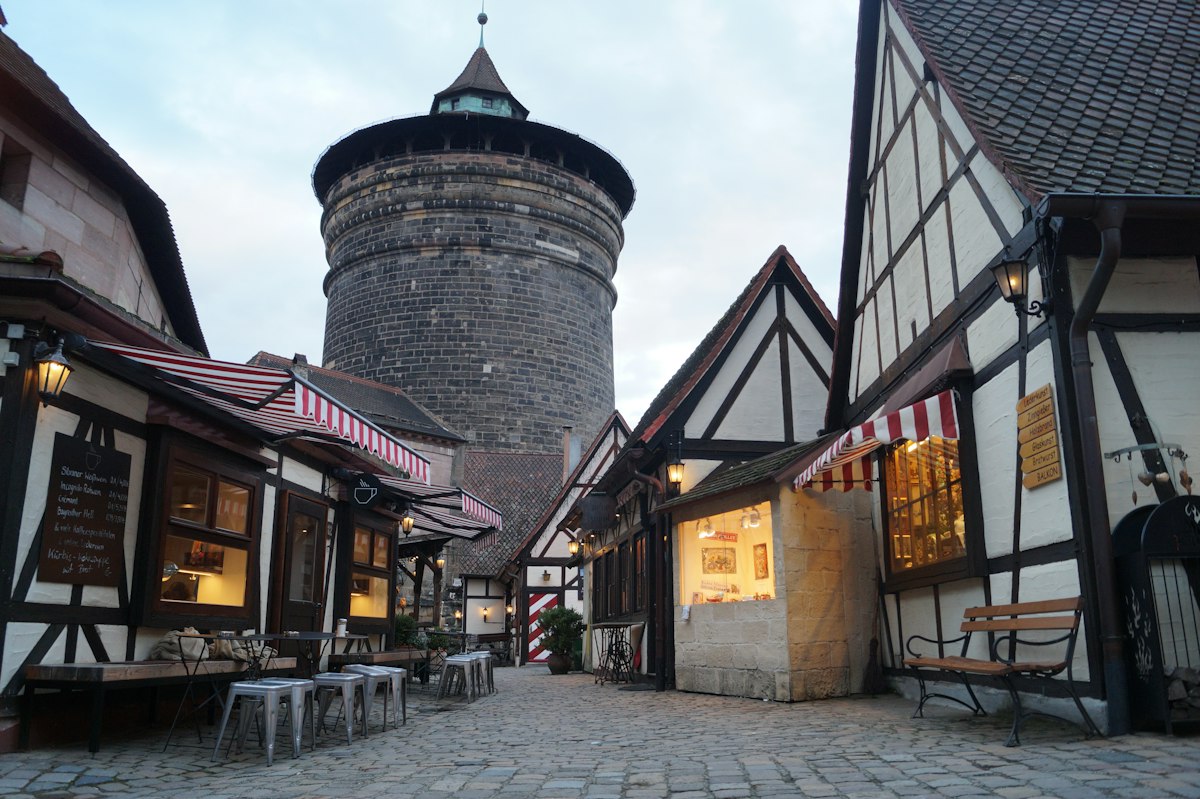
If a single Christmas market has shaped how the entire world imagines what a Christmas market looks like, that market is Nuremberg's Christkindlesmarkt. The gingerbread figures (Lebkuchen), the steam rising from warm Glühwein cups, the snow on the medieval rooftops of Hauptmarktplatz, the angelic voice of the Christkind opening the season from the Frauenkirche balcony — these are images you have seen on greeting cards, in films and in advertisements. Their origin is Nuremberg.
And if you want to combine this with one of Europe's most dramatic riverside markets, Cologne — with its 157m UNESCO Cathedral dominating the skyline and the Rhine in the foreground — is 3 hours by train.
Two cities, two completely different expressions of German Christmas. The complete guide follows.
NUREMBERG — Christkindlesmarkt: The Origin of Modern Christmas
Why Nuremberg Is Unique
Nuremberg did not give the world just one thing associated with Christmas — it gave it at least four:
1. Lebkuchen (gingerbread) — Nuremberg has been the world capital of gingerbread since the 14th century. Recipes with walnuts, almonds, candied orange peel and spices, baked on wafer discs (Oblaten). Only Lebkuchen produced in Nuremberg can carry the name "Nürnberger Lebkuchen" under EU Protected Geographical Indication.
2. The Christkind — the Christkind is not a generic angel from Christian iconography. Nuremberg created a specific institution: a young woman selected through public competition every two years who embodies the Christkind (the Christ Child), officially opening the market from the Frauenkirche balcony every year. This Christkind is a real representative — the golden crown, the white and gold dress, the curly blonde hair — who opens the market with a traditional speech (in Bavarian-Franconian dialect) exactly as was done in 1628.
3. Rauschgoldengel (Rustling Gold Angel) — Nuremberg's traditional Christmas tree ornament: an angel with wings of hammered gold foil (Rauschgold), hand-made from papier-mâché and gold taffeta. Originals: €150–600. Collectible and inheritable.
4. The Nutcracker (Nussknacker) — not the ballet, but the origin: mechanical wooden nutcrackers carved in the Erzgebirge (Ore Mountains) arrived in Nuremberg in the 17th century and spread from here across the world. Authentic collections range from €25 to €500+.
Nürnberger Christkindlesmarkt: Everything You Need to Know
Location: Hauptmarktplatz
Hauptmarktplatz (Main Market Square) is the medieval center of Nuremberg — dominated by Frauenkirche (Church of Our Lady, 14th century) on the eastern side and the Schöner Brunnen (Beautiful Fountain, 1396) on the northwest.
The market fills the entire square with approximately 180 red-and-white stalls — the traditional Nuremberg Christmas colors (red and white, not the brown common at other German markets).
The official opening: The Christkind appears from the Frauenkirche balcony on the first day of Advent and recites the Opening Prologue (Prolog) in Bavarian-Franconian dialect. Tens of thousands gather in the square. Church bells ring. It is the only time the Christkind appears in public.
2026 dates: 27 November – 24 December
Hours: Mon–Sat 10:00–21:00; Sun 10:00–20:00
Entry: Free
Nuremberg's 7 Christmas Markets
🌟 1. Christkindlesmarkt (Hauptmarktplatz) — The Main Market
180 red-and-white stalls, Frauenkirche behind, Christkind from the balcony, Lebkuchen and Glühwein. The most authentic, most photographed.
🧸 2. Kinderweihnacht (Children's Christmas)
At Hans-Sachs-Platz, entirely dedicated to children: Germany's oldest Christmas carousel (from 1905), a miniature train, an ice rink, Kasperle puppet shows (the Bavarian equivalent of Punch & Judy). Free, open daily.
🌟 3. Sternenmarkt (Stars Market)
At Rathausplatz, behind Hauptmarktplatz. Dedicated to social and charitable organizations — 100% of proceeds go to social programs. Smaller but meaningful.
🏛️ 4. Mittelaltermarkt (Medieval Market)
In the Lorenzplatz gallery: blacksmiths, glassblowers, tanners and potters in medieval costume. Open fire, medieval beer, artisan weapons and tools. The most atmospheric in terms of historical character.
🌲 5. Adventsmarkt im Handwerkerhof (Craftsmen's Court Market)
Near the main train station. A reconstructed medieval craftsmen's courtyard where artisans work live — cobblers, blacksmiths, glassblowers. Entry €2–3.
🎵 6. Schwabach Market (25 min by train)
A smaller town 25 minutes by train from Nuremberg with its own medieval market, less tourist-oriented, more authentic. Recommended as a half-day extension.
Nuremberg Food and Drink Guide
Drinks
Glühwein Classic German mulled wine — drier than the Austrian version, less sweet, more aromatic. Nuremberg serves it in handled mugs with a cup deposit of €1–2. Warm up at the stall — these are frequently the best-positioned spots in the square. €3–4.
Kinderpunsch Hot non-alcoholic punch for children and designated drivers: cherry juice base, cinnamon and vanilla. €2–3.
Franconian Beer Nuremberg is in Franconia — Northern Bavaria — which has a beer tradition distinct from Bavarian Munich. Franconian beers are drier, more bitter. Try Tucher Bräu or beer from the Nürnberger Brauhaus. Dark beer (Dunkelbier) is excellent in the cold.
Food — Nuremberg on a Plate
Nürnberger Rostbratwurst The sacred Nuremberg dish. Small pork sausages, maximum 9cm long (a regulation from 1313!), grilled over a beechwood fire. Served 6, 8, 10 or 12 on a ceramic plate with sauerkraut or potato salad. 6 pieces: €5–8. 12 pieces: €8–12.
Do not confuse with larger sausages — Nürnberger Rostbratwurst carries EU IGP status and must meet the 1313 recipe specification. Best place: the grill stall in Hauptmarktplatz, or restaurant Bratwursthäusle (operating since 1419).
Lebkuchen The supreme gastronomic souvenir of Nuremberg. Gingerbread in multiple forms: round on wafer discs (Elisenlebkuchen — the highest quality, without flour), glazed stars, gingerbread men. Prices: €10–40 for a wooden gift box. Authentic brands: Lebkuchen Schmidt, Wicklein, Haeberlein-Metzger.
Schäufele (Pork Shoulder) The emblematic Franconian dish — pork shoulder roasted with crispy crackling, served with potato dumplings (Kartoffelklöße) and red cabbage. Not available at market stalls — restaurant only. €15–22.
Elisenlebkuchen mit Glühwein The perfect Nuremberg combination: a slice of Elisenlebkuchen (high-quality spice cake on a wafer disc) with warm Glühwein. Best evening snack at the market. €5–8.
Zwetschgenmännle Decorative figures made from dried plums (Zwetschgen), wire and colored paper — a centuries-old Nuremberg craft tradition. Not edible, but collectible. €8–25.
Stollen The German Christmas cake — a heavy fruit bread with marzipan, rum-soaked raisins, candied orange peel and powdered sugar coating. Invented in Dresden in 1457. Available at Nuremberg bakeries: €15–30 per 1kg loaf. Keeps 4–6 weeks.
When to Visit Nuremberg
2026 Schedule
| Event | Date |
|---|---|
| Official opening (Christkind Prologue) | 27 November, 5:30pm |
| St. Nicholas Day (Nikolaustag) | 6 December |
| Advent concerts at Frauenkirche | Every weekend |
| Market closes | 24 December, 2:00pm |
Important: Nuremberg closes on 24 December morning — it does not stay open post-Christmas. If you want the Heiligabend (Christmas Eve) atmosphere, be there by midday on 24 December.
The Official Opening (27 November) — Don't Miss It
The opening of Christkindlesmarkt with the Christkind Prologue from the Frauenkirche balcony is one of the most emotionally resonant moments in European Christmas culture. 100,000+ people in the square, bells, fanfare, the Christkind in gold and white reciting the traditional verses. Free, but arrive 2+ hours early for a good position.
Getting to Nuremberg
✈️ By Air
Nuremberg International Airport (NUE) has direct connections from Berlin, Frankfurt, Vienna, Zurich, and some seasonal routes.
Airport → center:
- U-Bahn U2: 12 minutes, €3
- Taxi: €25–35
🚆 By Train
Nuremberg is excellently connected by rail:
- Munich (ICE): 1h, €25–60
- Frankfurt (ICE): 2h, €30–80
- Berlin (ICE): 3h30, €40–100
- Vienna (Railjet ÖBB): 4h, €35–90
- Prague (via Hof): 3h30, €25–70
Where to Stay in Nuremberg
🥇 Altstadt (Old Town): 5–10 min walk to Hauptmarktplatz. Most convenient and atmospheric. €80–180/night.
🥈 Bahnhofsviertel (Station Quarter): At the entrance to Altstadt, right by the main station. €60–130/night.
Hotel Marienthor (★★★★): Right in medieval Altstadt, Marientor city gate in front. €110–180/night.
Burghotel Nürnberg (★★★★): Below the walls of Kaiserburg (Imperial Castle). Spectacular views. €120–200/night.
Book on Booking.com →
COLOGNE — Markets on the Rhine with the Cathedral Behind
Why Cologne Is Different from Nuremberg
If Nuremberg represents Bavarian-Franconian tradition — medieval, authentic, specific — Cologne represents Rhenish Christmas: more urban, more international, with 7 distinct markets across the city and one of Europe's most spectacular backdrops: Cologne Cathedral (Dom), UNESCO World Heritage, 157m tall, with its two Gothic towers illuminated in blue and gold against the night sky.
Cologne is larger, more cosmopolitan, more varied. But exactly for this reason it offers more diversity of experience.
Cologne's 7 Christmas Markets
🌟 1. Weihnachtsmarkt am Dom (The Cathedral Market — Main)
Location: Roncalliplatz, right under the Cathedral The most photographed market in Cologne — 160 stalls with the 157m Cathedral as backdrop. Hohenzollernbrücke with love locks lit behind. The Rhine at 50m. This is the cover photo of every Cologne Christmas guide.
2026 dates: 23 November – 23 December
Hours: Mon–Sat 11:00–21:00; Sun 11:00–20:00
🌊 2. Weihnachtsmarkt am Heumarkt (The Largest)
Location: Heumarkt, in the Altstadt The largest market in Cologne: 300+ stalls, an ice rink in the square, a live music stage with daily concerts. The most lively and festive of the seven.
🌿 3. Neumarkt Weihnachtsmarkt (The Most Artisan)
Location: Neumarkt 250 stalls with emphasis on authentic German handicrafts. Manual work: Rhenish ceramics, glass-blowing, traditional costumes. The least tourist-oriented of the seven.
✨ 4. Zauberhafter Weihnachtsmarkt im Stadtgarten (The Most Romantic)
Location: Stadtgarten park Small, intimate, with lights in the trees and live classical music. Higher prices, superior quality. Best visited in the evening after 7pm.
🏛️ 5. Markt der Engel (The Angel Market)
Location: Alter Markt Dedicated to angels and Advent symbolism. Glass ornament stalls, bronze angel figurines, atmospheric music. A distinct character from all other markets.
🏰 6. Weihnachtsmarkt an der Bastei (The Most Select)
Location: Restaurant Bastei on the Rhine bank Small, 60 premium stalls, higher prices. Fine wines, premium cheeses, superior artisan goods. Accessible from Heumarkt (5 min walk).
🎭 7. Hahnentorburg Weihnachtsmarkt (The Medieval One)
Location: Rudolfplatz, next to 12th-century Hahnentorburg tower Medieval atmosphere under a 12th-century city gate. Medieval costumes, open fire, Glühwein in stoneware cups.
Cologne Christmas Food and Drink
Drinks
Kölsch Beer Cologne's legendary beer — blond, clear, served ONLY in cylindrical 0.2l glasses (Stangen). A waiter (Köbes) passes with a tray and automatically brings new glasses until you say stop. €2–3. It is not served in other glass types — locals take this seriously.
There is a tradition that drinking Kölsch in Düsseldorf (the rival city) is a form of treason. True or not, what is certain is that Kölsch does not export and you cannot taste the authentic version anywhere else.
Glühwein The Rhenish version — slightly sweeter than the Bavarian, with more cloves and cinnamon. €3–5 with cup deposit.
Feuerzangenbowle Red wine flambéed with a rum-soaked sugar cone, lit, dripping slowly into the warm wine below. An extraordinary visual spectacle. €6–10. Available at specialty stalls, evenings.
Food — Cologne on a Plate
Reibekuchen (Potato Pancakes) The emblematic Rhenish street food. Grated potatoes fried in oil, served with sour cream (saure Sahne) or apple sauce. €3–5. The most popular Christmas street food in Cologne and the Rhineland.
Rheinische Mutzenmandeln Small fried dough balls (similar to churros), rolled in cinnamon sugar or icing sugar. €3–5. Specific to Cologne and the Rhineland — not found elsewhere in Germany.
Flammkuchen (Tarte Flambée) The Rhenish version — slightly thicker than the Alsatian, with more crème fraîche. €7–12.
Himmel und Ääd (Heaven and Earth) The Rhenish national dish: potato purée (Erde — earth) with apple compote (Himmel — heaven) and blood sausage (Blutwurst). Strange combination, extraordinarily good. At a restaurant: €10–16.
Rheinischer Sauerbraten (Rhenish Pot Roast) Beef marinated for 3–5 days in vinegar, red wine and spices, slow-cooked with raisins. The Rhenish Sunday dish par excellence. At a restaurant: €15–22.
Cologne Christmas Schedule
| Event | Date |
|---|---|
| Markets open | 23 November |
| St. Nicholas Day (Nikolaustag) | 6 December |
| Cathedral Advent concerts | Every weekend |
| Markets close | 23 December |
Important: Cologne closes on 23 December — one day earlier than Nuremberg. Plan your visit between 23 November and 23 December.
Getting to Cologne
✈️ By Air
Cologne/Bonn Airport (CGN) has excellent connections across Europe with Eurowings, Ryanair, Wizz Air.
Airport → center:
- S-Bahn S13: 15 minutes, €3
- Taxi: €25–35
🚆 By Train
Cologne Hauptbahnhof is on Europe's major high-speed rail corridor. The train station is 50 meters from the Cathedral:
- Frankfurt (ICE): 1h, €25–60
- Amsterdam (Thalys): 2h30, €30–80
- Paris (Thalys): 3h15, €35–100
- Brussels (Thalys): 2h, €25–70
- Nuremberg (ICE): 3h, €30–80 — perfect for the circuit
Combining Nuremberg and Cologne: The 5-Day Circuit
The two cities are perfectly complementary and 3 hours apart by train:
| Day | Location | Highlights |
|---|---|---|
| 1 | Nuremberg | Arrival, Hauptmarktplatz market, evening Glühwein |
| 2 | Nuremberg | Kaiserburg (Imperial Castle), Albrecht-Dürer-Haus, Lebkuchen shopping |
| 3 | Nuremberg → Cologne | Train 3h, arrive Cologne, Cathedral at dusk, Heumarkt market evening |
| 4 | Cologne | All 7 markets on foot, Cathedral interior, Romano-Germanic Museum |
| 5 | Cologne | Rhine walk, departure |
Budget for 5-day circuit (per person):
- Flights + internal train: €100–200
- 4 nights accommodation: €200–400
- Food and drink: €150–250
- Museums + transport: €50–80
- Total: €500–930
Where to Stay in Cologne
🥇 Altstadt-Nord (Near Cathedral): 10 min walk to all 7 markets. €80–200/night.
🥈 Deutz (across the Rhine): Direct view of Cathedral and Rhine market. 5 min by tram. €60–130/night.
Dom Hotel Köln (★★★★★): Literally across from the Cathedral — Cathedral view rooms are €300–600/night. Standard rooms: €150–280/night.
Hotel Hopper et cetera (★★★★): Former monastery in Altstadt. €90–160/night.
Book on Booking.com →
Getting Around Cologne
Cologne has an extensive U-Bahn + S-Bahn + tram network. The center is fully walkable — all 7 markets are within 1.5km of each other.
| Ticket | Price |
|---|---|
| Single journey (zone 1a) | €3.10 |
| Day pass (24h) | €8.80 |
| 3-day pass (72h) | €22 |
1-Day Nuremberg Itinerary
9:00 — Breakfast at an Altstadt café. Nürnberger Brötchen and hot coffee. 10:00 — Hauptmarktplatz: Schöner Brunnen fountain, Frauenkirche interior, first Glühwein, browsing stalls. Try Nürnberger Rostbratwurst immediately. 12:00 — Lunch at Bratwursthäusle: 12 Nürnberger Rostbratwurst + sauerkraut + Franconian beer. 14:00 — Kaiserburg (Imperial Castle): 1h30 visit, panoramic view from Sinwellturm. 16:00 — Albrecht-Dürer-Haus: birthplace of Germany's greatest Renaissance artist. €7. 1h. 17:30 — Return to Hauptmarktplatz for twilight, Christkind visible from Frauenkirche window. 19:00 — Dinner: Schäufele or Sauerbraten at a Franconian restaurant.
1-Day Cologne Itinerary
9:30 — Cologne Cathedral: free interior access, tower tour tickets (€5). Absolute city view from above. 11:00 — Cathedral market (Roncalliplatz): 160 stalls, Cathedral above, Rhine behind. 12:30 — Lunch: Reibekuchen or Flammkuchen + Kölsch. 14:00 — Heumarkt: the largest market, ice rink, 300+ stalls. 16:00 — Neumarkt: authentic German handicrafts. 17:30 — Alter Markt (Markt der Engel) + Altstadt walk. 19:00 — Dinner: Himmel und Ääd or Rheinischer Sauerbraten at a traditional Brauhaus. 20:30 — Cathedral illuminated at night + Roncalliplatz market after dark.
Families with Children
Nuremberg: Kinderweihnacht (Hans-Sachs-Platz) is 100% dedicated to families: Germany's oldest Christmas carousel (1905), miniature train through the Altstadt, ice rink, Kasperle puppet shows. The Christkind institution fascinates children of all ages — a real person, in elaborate costume, appearing from a medieval church balcony. It's not a shopping mall Santa.
Cologne: The Heumarkt market has the largest ice rink among the 7 markets. Daily live music performances, traditional carousel at Neumarkt. Legoland Discovery Centre on the Rhine bank: €20–25/person, indoor option for a rainy day (3–12 years), booking required.
Cultural Programme
Nuremberg
Advent concerts at Lorenzkirche and Frauenkirche: Both medieval churches have almost daily Advent concerts — the monumental organ, the Nürnberger Knabenchor (Nuremberg Boys' Choir, since 1626!), Baroque music. Free admission for some, €15–30 for special concerts.
Staatstheater Nuremberg: The Nutcracker (Nussknacker) is performed every Advent — a local tradition directly connected to Nuremberg as the origin of the mechanical wooden nutcracker. Tickets €20–50.
Cologne
Cologne Cathedral Concerts: The Cathedral's organ (one of the world's largest) has Advent concerts. €10–20. The acoustics under Gothic vaults are extraordinary.
Kölner Philharmonie: One of Germany's most important concert halls. Advent programme includes Handel's Messiah, Bach's Christmas Oratorio. Tickets €25–80.
The History: Why Martin Luther Invented the Christkind
Martin Luther, in his Protestant Reformation, replaced St. Nicholas (Nikolaus) as the gift-bringer with the Christkind (the Christ Child), specifically to eliminate the veneration of saints. Nuremberg, a strongly Protestant city where the Reformation arrived early, immediately adopted this innovation — hence the unique Nuremberg institution of the Christkind, distinct from Nikolaus (who continues separately on 6 December).
The tradition has been maintained since 1628 with only brief interruptions: WWI (1914–1918), WWII (1939–1945), and COVID (2020–2021). Otherwise, continuous for nearly 400 years.
Practical Tips Nobody Tells You
Nuremberg: The best Lebkuchen are not at market stalls — they're at the established bakers (Lebkuchen Schmidt, Wicklein). Market stalls vary enormously in quality. Look for the IGP certification and the Nuremberg origin label.
Nuremberg: Come for the official opening (27 November, 5:30pm) with 2 hours to spare. Arrive early, stay near Frauenkirche, and you will witness one of the most emotionally powerful moments in European Christmas culture.
Cologne: Kölsch is served in 0.2l glasses only — this is non-negotiable. If you want more, you get more glasses. Asking for a large glass is a minor social transgression.
Cologne: The Cathedral market at night (after 8pm) is completely different from daytime — quieter, the Cathedral lit, the Rhine visible behind. This is when to photograph it.
Both cities: Peak weekend crowds (5–7 and 12–14 December) are significant. Weekday visits (Tuesday–Thursday) are 30–50% less crowded.
Budget Comparison
3 Days Per Person (Economy / Mid-Range / Premium)
| Category | Nuremberg | Cologne |
|---|---|---|
| Return flights | €80–150 | €70–130 |
| 2 nights accommodation | €120–280 | €130–300 |
| Food per day | €25–50 | €30–55 |
| Market drinks per day | €15–25 | €15–30 |
| Museums + transport | €10–30 | €10–30 |
| Total 3 days | €300–550 | €320–580 |
Nuremberg is slightly cheaper than Cologne as a general price level — the Rhineland has higher living costs than Franconia.
What inflates the budget quickly: Lebkuchen shopping. A wooden gift box of Elisenlebkuchen from Lebkuchen Schmidt: €25–40. Multiply by family gifts and you're at €100–200 in gingerbread alone. Budget for it consciously.
Day Trips from Nuremberg
Bamberg (40 min by train): One of Germany's most beautifully preserved medieval towns — UNESCO World Heritage, famous for Rauchbier (smoked beer), Bamberg Cathedral, and the Altes Rathaus perched on a bridge in the middle of the river. Brilliant day trip from Nuremberg. Train: 40 min, €8–12. Bamberg has its own small Christmas market, far less crowded than Nuremberg.
Rothenburg ob der Tauber (1h by train + bus): The most fairytale medieval town in Germany — entirely preserved city walls, the Romantic Road, and the Reiterlesmarkt (Rothenburg Christmas market), considered the most romantic in Germany after Nuremberg. Train from Nuremberg: 1h+. Recommended if you have an extra day.
Day Trips from Cologne
Aachen (45 min by train): The city of Charlemagne, with the Aachen Cathedral (another UNESCO World Heritage) and an excellent Christmas market right at the Cathedral. Train: 45 min, €10–15.
Düsseldorf (30 min by train): Cologne's eternal rival has 7 Christmas markets of its own, with the Altstadt market on the Rhine bank being spectacular. Note: locals joke that any Cologne resident caught there is a traitor — but the market is worth it. Train: 30 min, €8–15.
Bonn (25 min by train): Beethoven's birthplace, on the Rhine, with a lovely Christmas market in Münsterplatz. The Beethoven House museum (birthplace) is excellent. Train: 25 min, €6–10.
Common Mistakes
❌ Nuremberg: Buying Lebkuchen from any stall Quality varies enormously. Choose established brands: Lebkuchen Schmidt, Wicklein, Haeberlein-Metzger. Avoid unlabeled stalls and airport souvenir shops.
❌ Nuremberg: Missing the official opening The Christkind Prologue from the Frauenkirche balcony is unique in European Christmas culture. Come 2+ hours early.
❌ Cologne: Drinking Kölsch from large glasses Kölsch is served in 0.2l Stangen only. It's part of the ritual and local identity.
❌ Cologne: Staying at only one market 7 markets, 10–20 minutes walking between them, all with distinct characters. Plan for all 7, or at least 4–5.
❌ Both: Arriving without weekend accommodation booked Peak weekends in Advent (5–7, 12–14 December) book out months ahead.
Practical Information
| Info | Nuremberg | Cologne |
|---|---|---|
| Currency | Euro (€) | Euro (€) |
| Language | German; English widely spoken | German; English widely spoken |
| Emergency | 112 | 112 |
| Transport | U-Bahn, Tram | U-Bahn, S-Bahn, Tram |
| Climate | -5°C to +5°C, possible snow | 0°C to +8°C, mild, often rainy |
eSIM and Connectivity in Germany
Germany is in the EU — your European SIM card works with no extra roaming charges. For non-EU travelers:
Activate Airalo eSIM for Germany →
Practical Tips Nobody Tells You
Nuremberg: The Rauschgoldengel (Rustling Gold Angel) ornaments with the authentic Nuremberg hallmark are fragile and expensive. If you're buying one, ask the stall for bubble wrap before you pack it. Many stall vendors carry it specifically for tourists who've just realized they're carrying a €200 ornament in their coat pocket.
Nuremberg: Nürnberger Rostbratwurst (the small pork sausage) is served in units of 6, 8, 10 or 12. Don't be surprised when the waiter brings a ceramic plate — this is the traditional serving format, unchanged since the 14th century. You eat them with a toothpick or fork, with mustard, alongside sauerkraut or potato salad. Never in a hot dog roll (that is a different sausage, Bratwurst vom Grill, and not the authentic Nuremberg dish).
Cologne: The love locks on Hohenzollernbrücke (the railway bridge next to the Cathedral market) are a popular photograph. As of 2024 there are approximately 1 million padlocks on the bridge, adding an estimated 2–4 tonnes of weight. The city has tried to remove them and failed — they keep coming back. Bring a lock and add yours to the collection if you're inclined.
Both cities: The cup deposit system is €1–3 per cup. Many visitors keep the cups as souvenirs — the design is unique each year. If you're visiting multiple markets across multiple years, a collection of German Christmas market cups is a conversation piece.
Weather planning: Nuremberg in December gets genuine continental winter — expect -5°C with possible snowfall. Cologne's climate is milder and wetter (maritime influence from the North Sea via the Rhine corridor) — 0°C to +5°C, often grey and rainy rather than snowy. Dress differently for each city.
Travel Insurance
EKTA travel insurance for Germany →
German Vocabulary for Christmas Markets
| German | Pronunciation | Meaning |
|---|---|---|
| Glühwein | GLEW-vine | Mulled wine |
| Lebkuchen | LEBB-koo-hen | Gingerbread |
| Bratwurst | BRAHT-voorst | Grilled sausage |
| Frohe Weihnachten | FRO-he VY-nahkh-ten | Merry Christmas |
| Danke | DAHN-keh | Thank you |
| Bitte | BIT-teh | Please / You're welcome |
| Wie viel kostet das? | vee FEEL KOS-tet dahs | How much does this cost? |
| Prost! | PROHST | Cheers! |
| Ein Glühwein, bitte | INE GLEW-vine BIT-teh | One mulled wine, please |
| Guten Abend | GOO-ten AH-bent | Good evening |
Final Checklist
2–3 months before:
- Book flights (Nuremberg: Eurowings, Ryanair; Cologne: Eurowings, Ryanair, Wizz Air)
- Book accommodation (peak Advent weekends fill months ahead)
- Decide: Nuremberg only (3 days), Cologne only (3 days) or circuit (5 days)
1–2 weeks before:
- Reserve restaurants for dinner (Bratwursthäusle Nuremberg)
- Check if 27 November (Nuremberg opening) fits your dates
- Buy travel insurance
On departure:
- Euro cash (€500–1,000 for cash-only stalls and cup deposits)
- Waterproof boots: Nuremberg can be -5°C with snow; Cologne 0°C and often wet
- Thermal layering: Hauptmarktplatz and Roncalliplatz are wind-exposed; inner layers essential
- Extra soft bag in your suitcase: Lebkuchen wooden boxes, Rauschgoldengel, Nussknacker, Stollen are heavy
- Bubble wrap or socks to protect fragile Rauschgoldengel ornaments in luggage
- Download DB Navigator (German trains), KVB app (Cologne transport), VAG app (Nuremberg transport)
- Check luggage weight limits if flying — Christmas shopping in Germany gets heavy fast
- Google Maps offline for Nuremberg Altstadt (internet may be slow in market crowds)
Why Germany Has the World's Most Authentic Christmas Markets
German Christmas is not an event — it is a 500-year cultural institution. The Advent calendar, the Christmas tree (a German invention, 17th century), Lebkuchen, Stollen, Glühwein, the Christkind, Nikolaustag — all originated in the German-speaking world and spread from here across the planet.
Nuremberg gives you the roots: original, austere, with 400 years of continuity and a real Christkind in the balcony. Cologne gives you the spectacle: a 157m Cathedral, the Rhine in front, 7 markets with distinct personalities.
Together, in a 5-day circuit, they give you the complete German Christmas — from medieval to modern, from authentic to cosmopolitan.
Buy the ticket. The luggage home will be heavier with Lebkuchen and Nussknacker. It will be worth it.
Book early — Nuremberg and Cologne fill up fast during Advent.
Nuremberg accommodation → | Cologne accommodation →
Stay connected:
Airalo eSIM for Germany →
Travel covered:
EKTA travel insurance →
Some links on this page are affiliate links. If you book through them, we may earn a commission at no extra cost to you. Our recommendations stay honest.