
Bruges Christmas Markets: Complete Guide 2026 — Markt, Canals and Medieval Magic
Bruges Christmas Markets: Complete Guide 2026 — Europe's Most Romantic Medieval Christmas
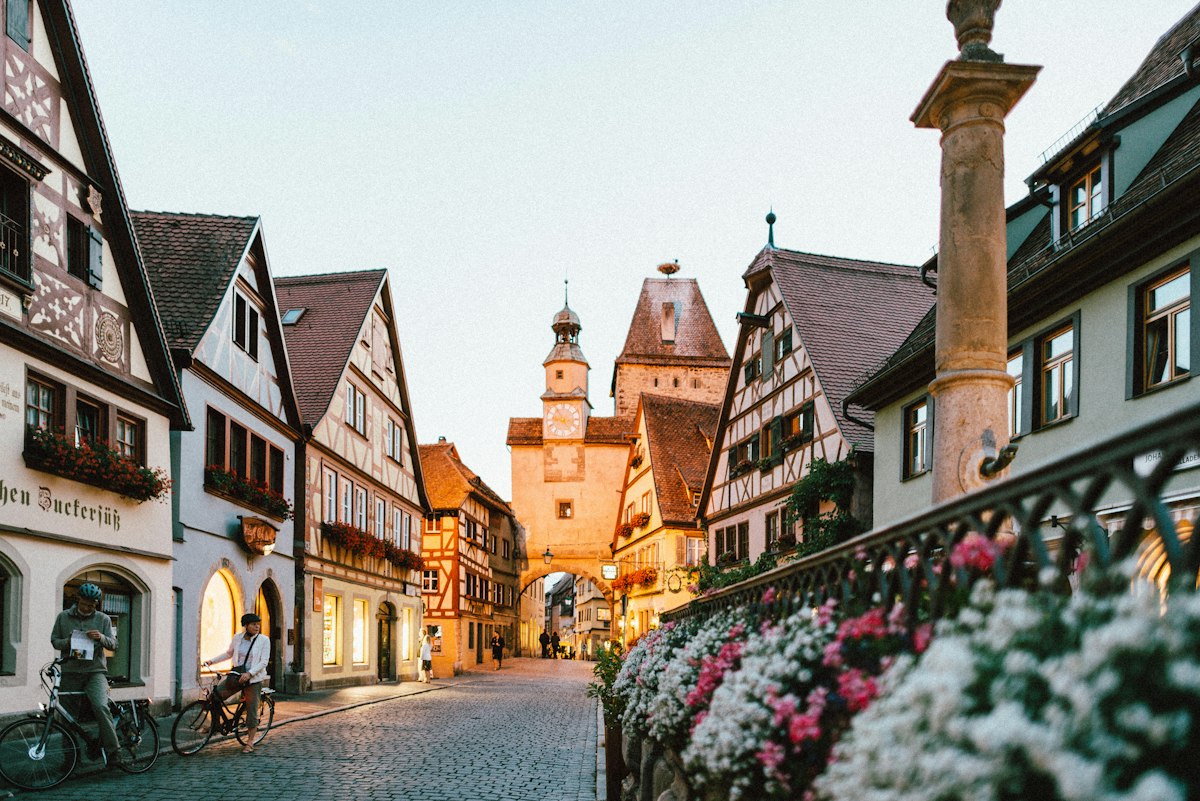
Some cities look like they were designed for Christmas. Bruges is one of them — perhaps the most perfect of all in Europe. Medieval canals half-frozen, 13th-16th century buildings lit by torches and garlands, the smell of fresh Belgian waffles and warm chocolate drifting down cobblestone streets, the sound of Belfort's carillon bells echoing over terracotta rooftops.
Bruges doesn't need artificial Christmas decorations — the city itself is the decoration. UNESCO added Bruges to its World Heritage list precisely because it is one of the best-preserved medieval ensembles in Europe. At Christmas, this architecture becomes the natural stage for one of the most authentic and romantic Advents in the world.
This guide covers:
- Bruges Christmas markets (Markt, Simon Stevinplein and more)
- Winter attractions beyond the markets — canals, chocolate, Belgian beer
- How to get to Bruges from across Europe
- Where to stay and how much it costs
- Essential Belgian food and drinks
- 3-day itinerary and full budget
- Day trips from Bruges
Why Bruges Is Europe's Most Romantic Christmas Destination
Before the practical details, it's worth understanding what makes Bruges genuinely different from competitors like Vienna, Prague or Strasbourg.
Authentic medieval architecture. Unlike many European cities that rebuilt their historic centres after World War II, Bruges suffered no major destruction — the medieval core is authentic, not reconstructed. The buildings around the Markt and along the canals are original, dating from the 13th to 17th centuries. The Christmas market isn't an event added onto a modern backdrop — it's a medieval square that reopens every year where it has always stood.
Human scale. Bruges is a small city (120,000 inhabitants) with a historic centre walkable in 20 minutes. There are no large distances, no metro to navigate — everything is around the corner. This gives it an intimacy that large cities (Vienna, Paris, London) cannot replicate.
The canals. Bruges is nicknamed the "Venice of the North" — 90 km of canals crisscross the city, with stone bridges at every turn. In winter, with lights reflected in still water and, occasionally, ice forming at sub-zero temperatures, Bruges looks like a 19th-century Christmas illustration come to life.
Chocolate, beer and gastronomy. Belgium produces some of the world's finest chocolate and Belgian beer is recognised as UNESCO Cultural Heritage. Bruges has over 50 chocolate shops in the historic centre — more per square kilometre than anywhere else on Earth. The Belgian waffle (Liège style), moules-frites and speculoos round out a gastronomic line-up hard to match anywhere.
Markt Christmas Market — The Heart of Bruges Advent
General Description
Markt (the Main Square) is the historic heart and symbol of Bruges — a wide 150×100 metre square flanked by guild houses from the 14th-19th centuries with tall narrow facades, dominated by the Belfort belfry tower (83 metres) that has watched over the city since the 13th century.
At Christmas, the Markt transforms into Bruges' main Christmas market — with dozens of white wooden chalets with thatched roofs, an ice rink in the centre of the square and spectacular illuminations that make this one of the most photographed Christmas scenes in Europe.
2026 Dates: Approximately 25 November — 2 January 2027
Access: Central Bruges — Markt is the natural arrival point for any walk through the city. Brugge railway station is a 15-20 minute walk.
What You'll Find at Markt
Artisan goods and gifts: The Markt chalets offer a mix of Belgian and artisan European products:
- Handmade Belgian chocolates — artisan pralines, chocolate figurines, gift boxes
- Bruges lace — Bruges is the world capital of handmade bobbin lace (Brugse kant), a tradition dating to the 16th century; scarves, tablecloths, clothing in authentic lace
- Belgian craft beers — collector bottles, original glasses, gift sets
- Crystal glassware from Liège and other Belgian regions
- Hand-carved wooden toys and Christmas decorations
- Speculoos and Belgian sweet specialities
Food and drink: The square has an excellent food section with Belgian specialities:
- Belgian waffles (Liège or Brussels style) — warm, crispy, with syrup, whipped cream or chocolate
- Glühwein and warm cider with cinnamon
- Moules-frites — mussels in buttery wine sauce with crispy fries
- Vol-au-vent — puff pastry with chicken, mushrooms and creamy sauce
- Speculoos warm with milk and spice
- Frieten (Belgian chips) — double-fried in beef fat, served with artisan mayonnaise
Ice rink: The most romantic feature of Christmas on the Markt is the artificial ice rink in the centre of the square. With the Belfort behind you and illuminated chalets all around, it is one of the defining visual experiences of Christmas in Bruges. Skate hire is included in the ticket (~€7-10/person).
Concerts and performances: The Belfort's 47-bell carillon plays Christmas songs and medieval music several times daily — a unique, authentic sound impossible to hear anywhere else. The central stage hosts carol concerts, Flemish folk music and children's shows.
Simon Stevinplein — The Artisan Market
Simon Stevinplein is the second important square for Christmas in Bruges — smaller and more intimate than the Markt, with a more artisan focus.
The square is named after Simon Stevin (1548-1620), the Flemish mathematician and engineer who introduced decimal notation to European mathematics. His bronze statue stands in the middle of the square surrounded by Christmas chalets.
What Simon Stevinplein offers:
- Emphasis on local craftsmanship and Belgian handmade products
- Live Bruges lace demonstrations by local craftspeople
- Artisan chocolate at lower prices than the central shops
- Belgian wines and jenever (traditional Dutch-Belgian gin) tastings
Distance from Markt: 5 minutes on foot.
Winter Glow — Bruges Light Festival
Running parallel to the Christmas markets, Bruges organises every year the Winter Glow — a festival of contemporary light installations that transforms the historic centre into an open-air light art museum.
Dozens of European and international artists install light art works on the facades of historic buildings, along the canals and in Bruges' parks. Some installations are interactive — visitors can control colours or movement through an app.
2026 Dates: Usually from late November through 2 January 2027
Access: Free — installations are spread throughout the historic centre, walkable in 1.5-2 hours.
Recommended light trail: Markt → Burg → Rozenhoedkaai (Bruges' most photographed canal) → Minnewater (the Lake of Love) → back via Walplein.
Bruges Winter Attractions Beyond the Markets
Belfort — The Medieval Carillon Tower
The Belfort (Belfry Tower, 83 metres) is the architectural symbol of Bruges and one of the most important medieval towers in Europe. Built between the 13th and 15th centuries, it dominates the Markt and can be seen from miles around.
At Christmas, the sound of the carillon (a 47-bell ensemble) rings out several times daily with carols and medieval music — a uniquely European aural experience.
Climbing the tower: The Belfort can be climbed (366 steps) for exceptional panoramas over Bruges and the surrounding Flemish countryside. Ticket price: ~€16/adult. Online booking recommended in season.
The Canals — Boat Rides and Walks
Canal boat trips are available in winter (depending on temperatures — they stop if the water freezes). A 30-minute tour of Bruges' canals, past medieval townhouses and under stone bridges, costs ~€12-14/adult.
Rozenhoedkaai (Rosary Quay) is Bruges' most photographed spot — the intersection of two canals with the Belfort in the background. At sunset, with Christmas lights reflected in the water, it is an almost unreal scene.
Walking along the canal banks is free and spectacular — Bruges has marked pedestrian routes along the canals, passing through quiet residential neighbourhoods far from the tourist circuit.
Basilica of the Holy Blood
The Basilica of the Holy Blood (Heilig-Bloedbasiliek), on the Burg (City Hall square, adjacent to the Markt), is one of the most important medieval churches in Flanders. It houses a relic believed to contain drops of Christ's blood, brought back from the Second Crusade.
At Christmas, the basilica runs special Advent services and atmospheric decorations. Entry to the lower basilica is free. Access to the relic: free entry (donation suggested).
Chocolate Museums and Artisan Shops
Bruges has Choco-Story, a museum dedicated to the history of Belgian chocolate (with tastings included, ~€12/adult), and over 50 chocolate shops in the historic centre.
Most celebrated chocolate houses in Bruges:
- The Chocolate Line (Simon Stevinplein) — considered one of the world's most creative chocolatiers, using unusual ingredients (wasabi, flowers, spirits)
- Dumon — family tradition, handmade pralines following old recipes
- Sweertvaegher — one of the oldest chocolate shops in Bruges
- Markt area — multiple artisan chocolate boutiques
Belgian chocolate as gifts from Bruges are among the best possible souvenirs — artisan pralines keep for 2-3 weeks at room temperature.
Belgian Beer — Brugse Zot and Beyond
Bruges has an active brewery in the historic centre — De Halve Maan (the Half Moon), where the famous Brugse Zot (Fool of Bruges) is brewed. The brewery has operated since 1856 and offers tours with tastings (approx. €14-16).
A curiosity: De Halve Maan built in 2016 a 3.2 km pipeline beneath Bruges to carry beer from the brewery to the bottling warehouse without trucks in the medieval centre — an ingenious and globally unique solution.
At the Christmas markets, you'll find warm Belgian beer (a kind of Belgian Glühwein), warm apple cider and jenever (Genièvre) — the traditional Dutch-Belgian gin, served warm in winter.
Minnewater — The Lake of Love
Minnewater (the Lake of Love) is an artificial lake from the 14th century, at the southern edge of the historic centre, surrounded by parks and old trees. Legend says that lovers who cross the stone bridge at Minnewater will stay together forever.
In winter, Minnewater with its white swans on still water and lights reflected in the lake is one of the most romantic places in Europe. Free entry, 15 minutes on foot from the Markt.
How to Get to Bruges
Bruges has no airport — it is reached through Brussels or other regional airports.
By Plane
Brussels South Charleroi (CRL) — nearest airport with budget direct flights:
- Ryanair, Wizz Air, easyJet operate from many European cities from €20-80 one way
- From CRL to Bruges: bus to Bruxelles-Midi, then direct train Bruxelles-Bruges — total 2-2.5 hours, ~€15-20
Brussels Airport (BRU) — more central, served by full-service airlines:
- British Airways, Lufthansa, Air France — from most European capitals
- From BRU to Bruges: direct train (1h45-2h), ~€20-25
London Heathrow/Gatwick/St Pancras: The Eurostar from London St Pancras to Brussels takes 2 hours, then 1 hour by train to Bruges. Total: 3-4 hours London-Bruges, with no airport queues.
Amsterdam (AMS) is another option — 2.5 hours by train to Bruges, regularly served by high-speed rail.
By Train
Bruges is exceptionally well connected by rail:
- Amsterdam → Bruges: 2.5 hours by IC train via Antwerp
- Paris → Bruges: 2.5-3 hours by Thalys/Eurostar to Brussels + IC
- London → Bruges: 3-4 hours via Eurostar
- Cologne/Köln → Bruges: 3-4 hours via Brussels
- Frankfurt → Bruges: 5-6 hours via Brussels
Bruges railway station (Brugge) is 15-20 minutes on foot from the Markt, or 10 minutes by bus.
By Car
Bruges is in northwestern Belgium, easily accessible by motorway:
- From Amsterdam: 2.5 hours
- From Brussels: 1 hour
- From Paris: 3.5 hours
- From London: 4-5 hours via Channel Tunnel (Eurotunnel, from Folkestone to Calais, then motorway)
Note: The historic centre of Bruges is largely car-free or access-restricted. Park at one of the P+R (Park & Ride) car parks at the city edge (free parking + free bus to centre) or in the underground parking beneath the station.
Where to Stay in Bruges
Bruges is a small city — almost any hotel in the centre is a short walk from the Markt and all attractions.
Best Areas
Centrum (historic centre): Most convenient — 5-10 minutes from the Markt, Belfort and canals. Most expensive but worth it in the Christmas season.
Sint-Andries and Sint-Michiels (immediate outskirts): 15-20 minutes on foot or 5 minutes by bike from the centre. Lower prices, more tranquil.
Near the station (Bruges station): 15-20 minutes on foot from the centre. Good if arriving by train with heavy luggage. More accessible prices.
Price Guide
| Type | Price/night (Christmas season) |
|---|---|
| Hostel (dorm bed) | €35-60 |
| 2-star hotel | €80-130 |
| 3-star hotel / B&B boutique | €120-200 |
| 4-star hotel | €180-320 |
| Apartment (2 persons) | €90-160 |
Important: Bruges during the Christmas season is significantly more expensive than Budapest, Prague or Kraków — Belgium is a Western European country with Western European prices. A good 3-star hotel in the centre costs €150-200/night.
🏨 Book your Bruges hotel: Booking.com Bruges
Belgian Christmas Food and Drink — What You Must Try
At the Markets
Liège Waffle — the Belgian waffle with caramelised sugar pearls in the dough, crispy and sweet, cooked on a special iron. Different from the Brussels waffle (lighter, with a rectangular grid). The street food of Belgium, available at every chalet. Price: €2-4.
Belgian Frieten (chips/fries) — double-cooked in beef fat, first at lower temperature to cook through, then at high temperature for the perfect crust. Served in a paper cone with artisan mayonnaise, andaluza or other sauces. Belgian fries are an art — you haven't truly eaten chips until you've had them in Bruges. Price: €3-6 per cone.
Speculoos — the Belgian-Dutch biscuit with cinnamon, cloves and ginger, usually in the shape of St Nicholas or Christmas figures. At Christmas, fresh speculoos from artisan bakeries is exceptional — crumbly, fragrant, completely different from the industrial version. The Lotus Biscoff speculoos you've had on flights comes from Belgium.
Belgian Glühwein — sweeter and more fragrant than the German version, using Belgian or Luxembourgish wines with traditional Flemish spices. Price: €2.5-4.
Vol-au-vent — puff pastry filled with chicken, mushrooms and vegetables in creamy sauce — a Belgian winter classic, available at some stands. Price: €5-8.
Jenever (Genièvre) — the traditional Dutch-Belgian gin, served warm in winter with ginger or cinnamon. Distilled from grains, it predates English gin (which evolved from it). Price: €2-4 per glass.
Restaurants
Moules-frites — mussels in white wine sauce with cream, onion and celery, served with Belgian fries. The Belgian national dish, available in every Bruges restaurant, usually in generous portions (~1 kg of mussels). Price: €18-28/portion.
Waterzooi — the Flemish soup/stew with chicken or fish in creamy sauce with root vegetables. A traditional Ghent-Bruges dish, perfect on a winter day.
Stoemp — mashed potato with mixed vegetables (leek, carrots, cabbage), served with sausages or bacon. Flemish comfort food, typical of the cold season.
Belgian hot chocolate — made with real melted chocolate (not powder), thick and intense. Bruges' cafes and chocolate shops often serve hot chocolate with artisan pralines on the side.
3-Day Bruges Christmas Itinerary
Day 1 — Medieval Centre and Christmas Magic
09:00-10:00 — Breakfast at a traditional Flemish café with tartines, Belgian cheeses and hot chocolate.
10:00-12:30 — Markt: explore the chalets, buy artisan pralines, try a warm waffle. Climb Belfort for panoramas (book online).
12:30-14:00 — Lunch in central Bruges: waterzooi or moules-frites.
14:00-16:00 — Burg square (the medieval City Hall, one of Belgium's most beautiful Gothic buildings), Basilica of the Holy Blood, the Stadhuis.
16:00-17:30 — Canal walk at sunset: Rozenhoedkaai, Dijver, Groenerei.
18:00-20:00 — Simon Stevinplein market in the evening light — more intimate and romantic than the Markt.
20:00+ — Dinner and beer at De Halve Maan or another Flemish pub.
Day 2 — Canals, Museums and Chocolate
09:30-11:00 — Canal boat trip (30 min), departing from pontoons near Dijver or Rozenhoedkaai.
11:00-13:00 — Choco-Story (Chocolate Museum) or Gruuthusemuseum (authentic medieval furniture in a 15th-century building with direct views of Notre-Dame Cathedral).
13:00-14:30 — Lunch in the Sint-Anna neighbourhood — further from the tourists, better prices, authentic atmosphere.
14:30-16:00 — Artisan shopping: Bruges lace, handmade chocolate, speculoos.
16:30-18:00 — Minnewater at sunset: the swan lake and lights reflected in the water.
18:00-20:00 — Follow the Winter Glow route (light installations): Markt, Burg, canals.
20:00+ — Special dinner: Flemish restaurant with waterzooi and local beers.
Day 3 — Day Trip or Final Exploration
Day 3 options:
Ghent (45 min by train, ~€6) — another magnificent Flemish medieval city with the stunning Graslei-Korenlei waterfront, Gravensteen Castle (12th century, fully preserved in the city centre), and its own Christmas market. Many travellers say Ghent is their new favourite after visiting it as a Bruges day trip.
Brussels (1h by train) — Grand Place at Christmas (UNESCO, light show on guild house facades), Manneken Pis in his Christmas costume, Galeries Royales Saint-Hubert, Belgian waffles at the best waffle houses.
Ypres (Ieper) (40 min by bus or train) — an emotionally significant city completely rebuilt after WWI, with Menin Gate memorial and thousands of military cemeteries in the surrounding area. Its Christmas market in the reconstructed Grote Markt has a more contemplative atmosphere.
Budget Estimate for Bruges at Christmas
3-Night Trip
| Expense | Estimated amount |
|---|---|
| Return flights (budget airline) + airport transfers | €60-200 |
| Accommodation 3 nights (3-star hotel centre) | €360-600 |
| Meals (9 meals, mid-range restaurants) | €100-200 |
| Local transport | €10-20 |
| Activities (Belfort, boat, museums) | €40-70 |
| Shopping (chocolate, lace, souvenirs) | €50-200 |
| Estimated total | €620-1,300/person |
Bruges is more expensive than Budapest, Prague or Kraków but remains accessible compared to London or Paris. The main saving is accommodation — hotels in the immediate outskirts are 40-50% cheaper than the historic centre.
Bruges vs Other European Christmas Markets
Bruges vs Vienna
Both are exceptional. Vienna has the imperial Austrian tradition and multiple large markets; Bruges has medieval authenticity and a feeling of intimacy. For couples, Bruges wins — it may be Europe's most romantic city at Christmas.
Winner for grandeur: Vienna Winner for romance: Bruges Winner for value: Vienna (Belgium is expensive)
Bruges vs Prague
Both are medieval UNESCO cities, but Bruges has a better-preserved and less commercialised centre. Prague is significantly cheaper (Czech Republic vs Belgium). Bruges wins on authenticity; Prague wins on value for money.
Bruges vs Strasbourg
Strasbourg has Europe's oldest Christmas market (since 1570) and deep Alsatian tradition. Bruges has more to offer beyond the markets (canals, chocolate, beer). Both are excellent — the choice comes down to preference for Franco-Alsatian versus Flemish traditions.
Bruges vs Budapest
Practically incomparable — they're completely different experiences. Budapest is a large city with thermal baths, spectacular light shows (St. Stephen's Basilica) and a much friendlier budget. Bruges is an intimate, romantic medieval town — and more expensive. Budapest for budget; Bruges for romance.
Practical Tips
Currency
Belgium is in the eurozone — you pay directly in €. Cards are accepted virtually everywhere. No need for large amounts of cash.
Getting Around Bruges
Bruges is best explored on foot — the historic centre doesn't allow cars (pedestrian zones or restricted access). Alternatively, cycling is the quintessential local transport — Bruges has one of Europe's highest cycling densities, and bike rentals are plentiful (€10-15/day).
The local bus (De Lijn) connects the station to the centre and surrounding neighbourhoods.
Best Time to Visit
- Last week of November — first week of December: Markets freshly open, moderate crowds, lower prices
- December weekends: More animated, more expensive, busier — but the atmosphere is at its peak
- 21-24 December: Most romantic and most crowded; maximum prices
- 27-31 December: Quiet after Christmas, but markets remain open
Book Well in Advance
Bruges at Christmas is extremely popular — good hotels in the centre book up 3-6 months in advance for December weekends. Book as early as possible.
Weather
Bruges in December: temperatures between 0°C and 8°C (32-46°F), frequent rain, wind. Snow is rare. Dress in layers and bring a waterproof jacket — a rainy Christmas in Bruges with a mulled wine in hand is still magical.
Frequently Asked Questions About Bruges at Christmas
Is Bruges worth visiting even without snow?
Absolutely yes. Snow in Bruges is rare in December — temperatures usually hover above freezing. But Bruges is magical without snow: lights reflected on dark canal water, morning mist rising from the waterways, Christmas illuminations on medieval facades. Many of Bruges' most iconic photographs are taken without snow.
How much time should I spend in Bruges?
A minimum of 2 nights (3 days) to comfortably see the historic centre and enjoy the Christmas atmosphere without rushing. With an extra day you can add a day trip to Ghent or Brussels.
Is Bruges good for families with children?
Yes, excellent. Bruges is one of the best European cities for families at Christmas: the Markt ice rink, Christmas pastries, Choco-Story (children love the chocolate tastings), canal boat trips, the Belfort with its panoramic views.
Is Bruges safe for tourists?
Belgium and Bruges are very safe for tourists. Normal precautions apply (watch for pickpockets in crowded market areas). Emergency number: 112 (EU-wide).
What are the best souvenirs to bring back from Bruges?
The best authentic Bruges souvenirs:
- Artisan Belgian pralines — from The Chocolate Line, Dumon or other specialist shops; they last 2-3 weeks
- Bruges bobbin lace (Brugse kant) — a 16th-century tradition; authentic pieces are hand-made and labelled accordingly
- Quality jenever (Belgian gin) in collector bottles
- Belgian beer — especially Brugse Zot in ceramic bottles
- Speculoos from artisan bakeries — far superior to the commercial version
Can I combine Bruges with other Belgian cities?
Easily. Bruges + Ghent (45 min by train) is one of Belgium's classic combinations — many visitors spend 2 nights in Bruges and 1 night in Ghent. Bruges + Brussels (1 hour by train) is another excellent combination — 2 nights in Bruges, 1 night in Brussels for Grand Place and Belgian chocolate shopping.
Is there a Christmas market in Bruges on Christmas Day itself?
The main markets are usually closed on 25 December (Christmas Day) but reopen from 26 December. The city itself — canals, Belfort, chocolate shops — remains beautiful and partially open. Restaurants and cafés have special Christmas menus.
Does Bruges get very crowded at Christmas?
December weekends in Bruges can be very busy — especially the Markt and the canal viewpoints. The best strategy: arrive early morning (before 10:00) for quiet canal photos, then join the market crowds from late morning. Weekdays are significantly quieter than weekends, even in December.
What are the opening hours of the Christmas markets?
Bruges Christmas markets typically open:
- Weekdays: 11:00 or 12:00 — 21:00 or 22:00
- Weekends: 10:00 or 11:00 — 22:00 or 23:00
- Christmas Eve (24 Dec): usually until around 18:00-20:00
- Christmas Day (25 Dec): usually closed
- Boxing Day onwards: normal hours resume
Check the official Bruges tourism website (visitbruges.be) for the specific 2026 hours.
Are there places in Bruges where locals go that tourists miss?
Beyond the main tourist circuit: the Lace Centre (Kantcentrum) in the Sint-Anna neighbourhood for live lace-making demonstrations; Walplein (a quiet square near Minnewater with a traditional Belgian brown café, De Garre); the windmills along the Kruisvest (a medieval city wall section with four restored windmills, just east of the centre); and Genthof (a small square in the east of the historic centre, far from the main tourist flow).
Useful Resources
- Bruges Official Tourism
- Winter Glow Bruges
- De Halve Maan — Brewery Tours
- Belfort Bruges — Ticket Booking
- Belgian Rail (NMBS/SNCB)
- Eurostar London-Brussels
- De Lijn local buses
10 Reasons to Visit Bruges at Christmas
- Europe's most romantic medieval setting — no other city looks more like a Christmas card come to life
- Canal reflections at night — Rozenhoedkaai with the Belfort reflected in dark water is one of Europe's most photographed winter scenes
- Belfort carillon — hearing 47 medieval bells play Christmas carols from a 13th-century tower is an experience you won't forget
- Markt ice rink — skating in front of guild houses that watched over merchants in the 14th century
- Belgian pralines from The Chocolate Line — arguably some of the world's most creative chocolates, available nowhere else
- Bruges lace — a 500-year-old craft tradition, still practised by hand, found only here
- Moules-frites on a winter evening — the Belgian national dish, best in its home country
- De Halve Maan Brugse Zot — a beer brewed in the heart of a medieval city, carried to its bottling plant through a 3.2 km underground pipeline
- Minnewater at dusk — swans on a 14th-century lake with Christmas lights and the smell of waffles nearby
- Winter Glow — a free light art festival that turns the entire medieval city into an open-air gallery every evening
The Unique Atmosphere of Bruges: What Makes It Unforgettable
There is something intangible about Bruges at Christmas that is hard to describe to someone who hasn't been. It's not just the beauty — it's the density of beauty per square metre. Turn any corner in the historic centre and you face a canal with stone bridges and 15th-century townhouses. Walk 50 metres and you're in front of a Gothic church. Walk another 100 metres and there's a chocolate shop with handmade pralines in the window, next to a lace boutique where a woman in her 70s is working bobbins at a table by the light of a lamp.
The scale of the city — small enough to walk everywhere — means you're never more than 5 minutes from something beautiful. And unlike Paris or Vienna, where the magic is spread across a large metropolitan area, in Bruges the magic is compressed into about 3 square kilometres.
This compactness is also what makes Bruges perfect for a short trip. You don't need a week to feel you've seen it. Three days is enough to visit everything important, eat very well, drink excellent Belgian beer, and leave with the feeling of having been somewhere genuinely special.
The Flemish character of Bruges adds another layer. Bruges is in Flanders, the Dutch-speaking region of Belgium — culturally distinct from French-speaking Wallonia and from the Netherlands. The Flemish Advent tradition mixes Sinterklaas (St Nicholas, arriving on 6 December to bring gifts to children) with Christmas proper, creating a December full of celebrations. Markets open earlier than in many countries, the food is hearty and rooted in centuries of brewing and confectionery tradition, and the hospitality in cafés and restaurants is warm without being performative.
If you've never been to Bruges, Christmas is the best possible time to go for the first time. And if you have been before — in spring or summer, with the crowds of day-trippers from Brussels — you'll discover that the winter version is an entirely different city. Quieter, warmer in feeling if not in temperature, more authentic, more its own.
🏨 Book your Bruges hotel: Booking.com Bruges
📱 eSIM for Europe: Airalo with code EKAA80H for 15% off.
🛡️ Travel insurance: EKTA Travel Insurance
Some links on this page are affiliate links. If you book through them, we may earn a commission at no extra cost to you. Our recommendations stay honest.